













Choosing the right decking material is a major decision when planning an outdoor living space. Homeowners often compare a composite deck vs wooden deck to understand which option delivers better durability, maintenance value, and long term performance. Knowing the true difference between a composite deck and a wooden deck helps you protect your investment and avoid costly repairs down the road.
This guide explains the key differences between composite and wood decking, with a strong focus on proper installation practices, including the use of waterproof tape on every top piece of subflooring to help prevent moisture damage and wood rot.
What Is a Composite Deck?
A composite deck is built using boards made from a blend of recycled wood fibers and plastic materials. These boards are engineered to resist many of the common issues associated with natural wood, including rot, insects, and moisture absorption.
Composite decking is popular among homeowners who want a long lasting deck with minimal maintenance. While the surface boards are highly durable, proper substructure protection is still essential. Even with composite decking, the framing beneath the deck is typically made of wood, which means moisture protection remains critical.
Key Characteristics of Composite Decking
- Manufactured from recycled and synthetic materials
- Resistant to moisture, rot, and insect damage
- Long lifespan with minimal surface maintenance
- Requires proper subfloor and framing protection
What Is a Wooden Deck?
A wooden deck is constructed entirely from natural lumber such as pressure treated pine, cedar, redwood, or hardwoods. Wood decks are valued for their classic appearance and natural warmth, but they require more attention over time.
Because wood is organic, it is especially vulnerable to moisture intrusion. Without proper installation techniques, including waterproofing measures, wood decks can rot from the top down, particularly where deck boards meet the subflooring and joists.
Key Characteristics of Wooden Decking
- Made from natural lumber
- Traditional and authentic appearance
- Lower upfront material cost
- Highly dependent on maintenance and moisture protection
Composite Deck vs Wooden Deck: Installation Differences That Matter
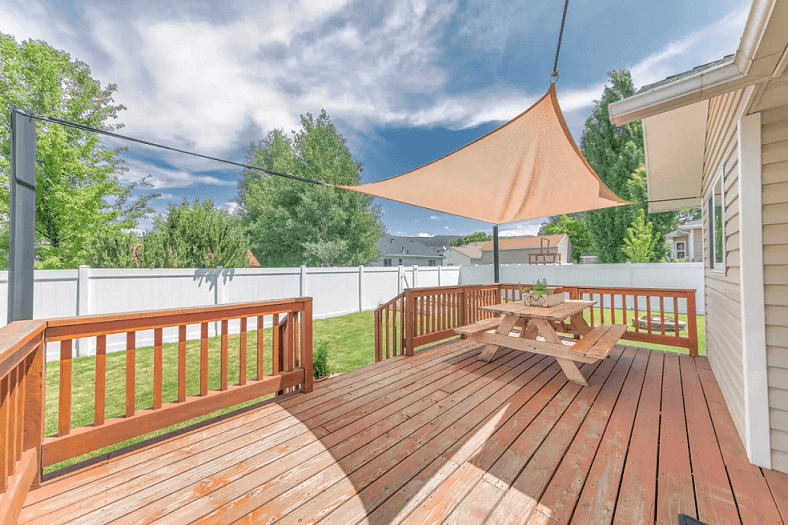
One of the most overlooked differences between a composite deck and a wooden deck is how moisture affects the structure beneath the surface boards.
The Importance of Waterproof Tape on Subflooring
Regardless of whether you choose composite or wood decking, waterproof tape should be installed on every top piece of subflooring, including joists, beams, and rim boards. This tape acts as a barrier that prevents water from sitting directly on the wood framing.
Why this matters:
- Water often gets trapped between deck boards and framing
- Standing moisture accelerates rot and decay
- Fastener penetrations allow water into the wood
- Rot typically starts at the top of the joist, where it is hardest to detect
Applying waterproof joist tape to every top surface of the subflooring significantly extends the life of the deck structure. This step is especially important for wooden decks but should never be skipped on composite deck installations either.
Maintenance Requirements
Maintenance is one of the biggest differences homeowners notice between a composite deck vs wooden deck.
Composite decking requires minimal surface maintenance. Cleaning with soap and water is usually sufficient to keep it looking good. It does not require staining or sealing. However, maintenance is not eliminated entirely. The wood substructure beneath the composite boards still needs protection, which is why waterproof tape on all framing tops is essential.
Wood decking requires ongoing maintenance. Boards must be stained or sealed regularly to protect against moisture and sun damage. Even with routine care, wood can crack, splinter, or warp over time. Without waterproof tape on the subflooring, moisture can penetrate the framing and cause rot long before surface boards show visible damage.
Durability and Lifespan
Composite decks are designed for longevity. Most composite boards are rated to last 25 to 30 years or more. Their resistance to moisture makes them more stable over time, but the deck is only as durable as its framing. Protecting the subflooring with waterproof tape helps ensure the structure lasts as long as the decking material.
Wood decks have a shorter and less predictable lifespan. Pressure treated wood may last 10 to 15 years, while cedar and redwood can last longer with proper care. However, moisture damage to the subflooring is one of the leading causes of premature deck failure. Waterproof tape helps reduce this risk by shielding the framing from constant water exposure.
Appearance and Aesthetic Appeal
Composite decking offers a consistent and uniform appearance. Boards are manufactured with controlled color and texture, providing a clean and modern look that changes very little over time.
Wood decking delivers a natural and timeless appearance. Each board has unique grain patterns and color variations. While many homeowners love this look, wood will weather and fade, especially if moisture is not properly managed.
In both cases, poor subfloor protection can lead to uneven surfaces, loose boards, and structural issues that negatively affect appearance over time.
Cost Comparison
Wood decks generally have a lower upfront cost, making them appealing for budget conscious homeowners. However, long term costs can add up due to maintenance, repairs, and potential framing replacement caused by rot.
Composite decks cost more initially but often provide better long term value. Reduced maintenance and longer lifespan offset the higher material cost. Adding waterproof tape to the subflooring is a small additional expense that can save thousands of dollars by preventing structural decay.
Skipping waterproof tape may lower installation costs slightly, but it significantly increases the risk of premature deck failure.
Moisture Protection and Structural Integrity
Moisture is the number one enemy of any deck. Rain, snow, and humidity all find their way into small gaps between boards and around fasteners.
Using waterproof tape on every top piece of subflooring:
- Prevents water from pooling on joists
- Protects screw and nail penetrations
- Reduces the risk of hidden rot
- Extends the life of both composite and wood decks
This step is considered a best practice by experienced decking professionals and should be included in any quality deck build.
Which Deck Is Right for You?
Choose a composite deck if you want low maintenance, long term durability, and a consistent appearance. Composite decking is ideal for homeowners who plan to stay in their home for many years and want predictable performance. Just remember that composite boards do not eliminate the need for proper subfloor waterproofing.
Choose a wooden deck if you prefer a natural look and lower upfront cost and are willing to commit to ongoing maintenance. Proper installation, including waterproof tape on all framing tops, is essential to prevent rot and extend the life of the deck.
Conclusion
Understanding the difference between a composite deck and a wooden deck goes beyond surface materials. While composite decking offers durability and low maintenance and wood decking provides classic beauty, both systems rely on a strong, protected substructure.
Applying waterproof tape to every top piece of subflooring is one of the most effective ways to keep wood from rotting and ensure your deck lasts for decades. Whether you choose composite or wood, investing in proper moisture protection during installation will protect your deck, your home, and your long term investment.